Same Day Dispatch - Order Before 2PM

Choosing Between MDF and PVC Skirting Boards

Choosing Between MDF and PVC Skirting Boards

, 7 min reading time

The floor is down, the walls are painted, yet something still feels unfinished? This is the moment when a single, often-overlooked question surprisingly determines the final effect: MDF or PVC skirting boards?

This small detail can make a huge difference - visually, practically, and for years to come.

What Are Skirting Boards and Why Do They Matter So Much?

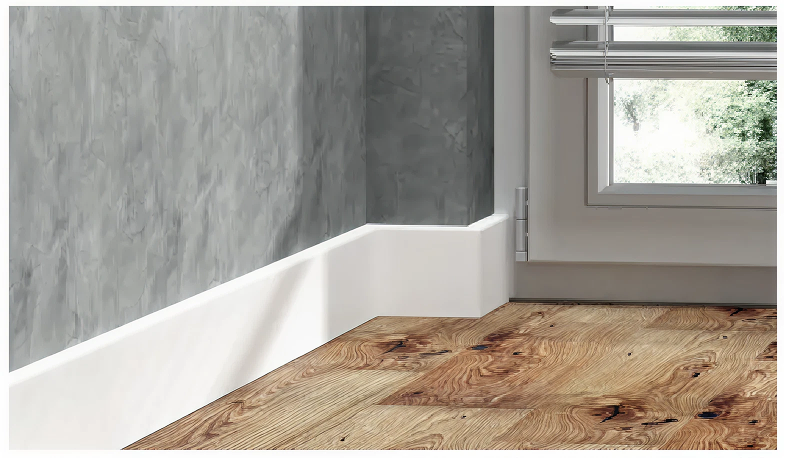
Skirting boards are the crucial finishing element that seamlessly connects your floor to the wall, making the entire interior look polished and thoughtfully detailed. They are essential for a few reasons:

  • Aesthetics: They elegantly cover expansion gaps, hide wall imperfections, and mask rough cuts where the flooring meets the wall.

  • Protection: Their role goes beyond looks! They shield your walls from scuffs and dirt, and protect the delicate lower edge from accidental knocks, such as those that happen during vacuuming.

The material you choose is the main factor determining how well your skirting boards perform day-to-day. So, what’s the better choice for your home MDF or PVC?

MDF Skirting Boards: The Designer's Choice for Style and Customization

MDF skirting boards are the perfect option for anyone who values aesthetics, consistency, and the ability to customize every detail to their personal style.

Where MDF Shines:

  • Unmatched Customization: MDF gives you total control over the final look. They are easily paintable in any shade you desire, allowing you to perfectly match them with your walls, doors, or window frames. This means you gain complete aesthetic control and never have to settle for a compromise.

  • Elegant Finish: MDF naturally complements real wood or luxury vinyl plank (LVP) flooring, enhancing the effect of a natural, warm, and sophisticated finish.

  • Ideal Rooms: This solution works best in your living room, bedrooms, offices, and hallways—anywhere that elegance and high style are key. MDF skirting boards often feature classic, milled profiles that resemble architectural trim, making them perfectly suited for classic, English, or modern classic interiors.

The Downside (Where Not to Use Them):

MDF is made from compressed wood fibers joined with resin and topped with a decorative layer. This structure makes them highly sensitive to moisture. They are not suitable for rooms exposed to water, such as bathrooms, laundry rooms, or utility spaces. In wet conditions, MDF can swell and deform over time. If you need a completely waterproof solution, PVC skirting boards are the better choice.

PVC Skirting boards: Unbeatable Durability for Kitchens and Bathrooms

In rooms where moisture and intensive use are everyday realities, moisture-resistant PVC skirting boards are the best performing choice.

Why PVC is Perfect for Wet Areas:

  • 100% Waterproof Toughness: PVC does not absorb water, will not swell, and will not warp over time. This preserves the aesthetic of your floor for years without the need for repairs or replacement.

  • Easy to Maintain: In kitchens, bathrooms, and entryways, water, steam, and spills are unavoidable. Plastic skirting boards maintain their appearance regardless of how often the floor is washed or accidentally splashed. Cleaning is effortless—a simple damp cloth is all it takes to keep them looking fresh and tidy.

  • Resilience: Durability is another major advantage. The material is resistant to the bumps, scratches, and impacts that can occur during daily household chores, such as vacuuming.

  • Practicality: PVC is also an excellent choice for any room where ease of installation and hassle-free, everyday use are priorities. Unlike MDF, PVC requires no special protection against moisture and does not react to changes in temperature or humidity.

The Aesthetic Trade-Off:

Aesthetically, PVC skirting boards are more modest. For many users, they do not offer the same elegant and sophisticated finish as the denser MDF skirtings.

Feature MDF (Medium-Density Fiberboard) PVC (Polyvinyl Chloride)
Moisture Resistance Highly prone to swelling and warping if exposed to standing water (e.g., from spills, leaks, or steam). 100% Waterproof. Completely resistant to water, making it the perfect choice for high-humidity and wet areas. 
Durability & Wear Decent, but can be prone to dents and chips on the edges from vacuum cleaners or accidental knocks. Repairs are difficult. Very Durable. Highly resilient against scuffs, scratches, and everyday impacts. Virtually maintenance-free.
Aesthetic & Finish Superior Finish. Offers a smooth, uniform surface that is perfect for painting (often comes pre-primed). It has a more solid, premium feel than many plastic alternatives. Functional/Modern. Typically comes in a white or wood-effect finish. While functional, some may find the look to be less substantial or more "plastic" than MDF.
Installation Easy to work with. Cuts cleanly, is dimensionally stable, and is resistant to splitting when nailed, making it very DIY-friendly. Can be slightly more brittle to cut and may require pre-drilling holes for nails/screws, but is generally easy to install.
Cost Generally more affordable than PVC, making it the budget-friendly choice for larger projects in dry areas. Tends to be more expensive upfront, but the long-term durability and lack of maintenance can save money in the future.
Best For Living rooms, hallways, bedrooms, and all other dry, low-moisture areas. Kitchens, bathrooms, utility rooms, and basements, anywhere water resistance is essential.


Installation Made Easy: Mounting MDF vs PVC skirting

Both MDF and PVC skirting boards can be installed using either adhesive (glue) or clips, but the requirements and final effect differ based on the material.

PVC Installation: The Flexible, No-Fuss Option

  • Simpler and More Forgiving: Installing PVC baseboards is generally simpler and more universal. Their lightweight, flexible nature makes them well-suited for covering minor wall imperfections and uneven surfaces.

  • Adhesive: Using a strong mounting adhesive allows you to quickly and permanently secure the skirting board without any drilling.

  • Clips: Clips require drilling into the wall but offer the significant advantage of easy future removal. This is extremely useful if you need to run or access cables, plan to paint the walls regularly, or anticipate future flooring changes.

MDF Installation: Precision is Key

  • Requires More Precision: MDF skirting boards can also be secured with glue or clips. However, due to their greater weight and rigid structure, they demand a very even wall surface and precise alignment during installation.

  • Clean Finish: Both mounting methods provide a clean, aesthetically invisible finish (no visible screws or nails).

  • Clips for Flexibility: For MDF, the clip system provides added flexibility, allowing for easy access to the space behind the skirting. This is especially useful in areas where you may need to access utilities or plan on future redecorating.

In summary, PVC offers a more forgiving and easier installation, while MDF requires a straighter wall but provides a superior aesthetic finish.

Which Material to Choose: Making Your Final Decision

When it comes to selecting the material for your skirting boards, the choice ultimately comes down to balancing style vs. practicality.

Choose MDF for Style and Sophistication

MDF baseboards are the superior choice when appearance and a refined finish are your top priority.

  • Elevate Your Space: They fit perfectly into elegant interiors, and their classic, milled edges instantly add character to a room.

  • Total Customization: You can easily paint them to match your walls, trim, or any specific colour palette.

  • Smart Alternative: MDF is a practical and economical alternative to solid wood, offering a similar high-end look without the high cost.

  • The Verdict: If aesthetics and a stylish, customizable finish matter most, MDF is an option worth serious attention.

Choose PVC for Durability and Functionality

PVC skirting boards are the practical choice. They are essential in areas where conditions are more challenging—places with high moisture, frequent cleaning, or a higher risk of bumps and scuffs.

  • Worry-Free Performance: They do not absorb water, are easy to install, and are simple to keep clean. They perform reliably, even after years of use.

  • The Verdict: If you need a skirting board that can handle moisture, impacts, and daily wear and tear without fail, PVC is the functional champion.


Blog posts

  • ⚪ White, Floor Colour, or Wall Colour? How to Choose the Perfect Skirting Boards

    ⚪ White, Floor Colour, or Wall Colour? How to Choose the Perfect Skirting Boards

  • XPS (Extruded Polystyrene) vs Other Skirting: Understanding the Differences

    XPS (Extruded Polystyrene) vs Other Skirting: Understanding the Differences

  • Choosing Between MDF and PVC Skirting Boards

    Choosing Between MDF and PVC Skirting Boards

© 2025 HiProfiles, Powered by Shopify

    • American Express
    • Apple Pay
    • Google Pay
    • Maestro
    • Mastercard
    • PayPal
    • Shop Pay
    • Union Pay
    • Visa

    Login

    Forgot your password?

    Don't have an account yet?
    Create account